Guide
How Chinese matchmaking works
The short answer: in China, meeting a spouse has traditionally been a project with helpers. Xiangqin (相亲) is the arranged blind date, a meeting set up because a parent, a friend or a matchmaker judged two people a plausible pair, with marriage as the stated purpose. Behind it stands the hongniang (红娘), the matchmaker woven into Chinese culture for centuries. This guide explains how xiangqin works, what families weigh, what happens in the park marriage markets, and where the tradition strains for Chinese Canadians and Chinese Americans.
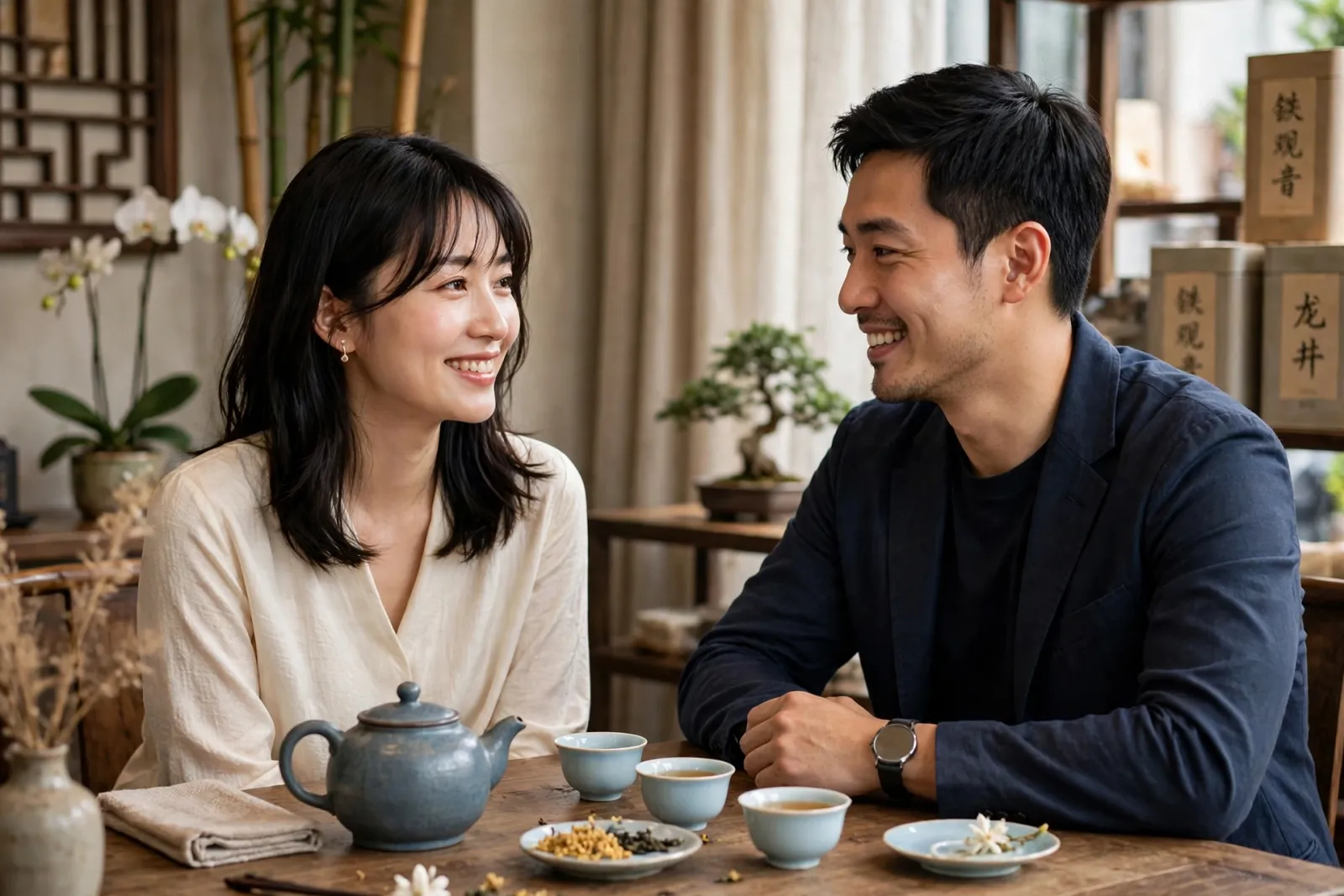
Xiangqin and the hongniang
Xiangqin (相亲). A blind date with the purpose stated in the name: two people meet to size each other up for marriage. Before anyone sits down, the basics have been exchanged: age, education, work, hometown, family circumstances. It is low on romance at the start by design: the first meeting tests whether there is anything worth building on.
The meiren and the hongniang (媒人, 红娘). The traditional go-between was the meiren, a matchmaker who knew both families, vouched for the facts, and carried proposals back and forth. Hongniang, literally the red lady, was the clever maid in the classic play The Story of the Western Wing (西厢记), who carried messages between two lovers. Her name became the warm, everyday word for a matchmaker.
The introducer today. In modern life the role often falls to an aunt, a coworker or a family friend who makes the introduction (介绍) and lends the meeting their credibility. Commercial agencies now do the same work at scale.
The role of the family
In Chinese tradition a marriage joins two families, not only two people. Parents are involved early and openly, and their approval is something couples actively seek rather than announce after the fact. A match the family opposes starts with a real handicap.
The old ideal is mendang hudui (门当户对), literally doors matched to doors: two households of similar standing joining as equals. Underneath the formality, parents are doing due diligence: checking that the other family is stable and decent, and that values line up.
Adult children hold the final say in most modern families. What parents hold is the research, the introductions and a strong advisory vote.
What families traditionally weigh
Stability and work. A steady job, a trade, a business of one’s own. The question being asked is whether this person can support a household over decades, not what this year’s income happens to be.
Housing. Owning an apartment (房子) has been a near prerequisite for men in many Chinese cities. It functions as a sign of readiness and seriousness more than a display of wealth.
Character (人品). Temperament, habits and how someone treats their own parents. Drinking, gambling and a bad temper are screened hard, because families know character is what a marriage actually runs on.
Family background. The other household’s reputation and circumstances: the mendang hudui check. This is the part second generation Chinese push back on hardest, and the part that translates worst abroad, where nobody can ask around about a family.
The person. Age, health and education are weighed too, and a good matchmaker has always known that two suitable files can still be two people with nothing to say to each other.
The park marriage markets
In parks across China, most famously People’s Park in Shanghai and Zhongshan Park in Beijing, parents gather at the xiangqin jiao (相亲角), the matchmaking corner. They pin printed profiles to umbrellas, boards and string lines: birth year, height, education, job, income, hukou (户口, household registration), apartment, car.
The adult children are often not there. Parents interview each other like recruiters, compare files, exchange phone numbers, and arrange a xiangqin only if the basics line up. It looks blunt, and it is: the market strips the search down to the facts families weigh first.
Reactions are mixed: some adult children are grateful for the legwork, some are embarrassed, and many quietly benefit. What the markets prove is the depth of the instinct: finding a spouse is too important to leave to one person scrolling alone.
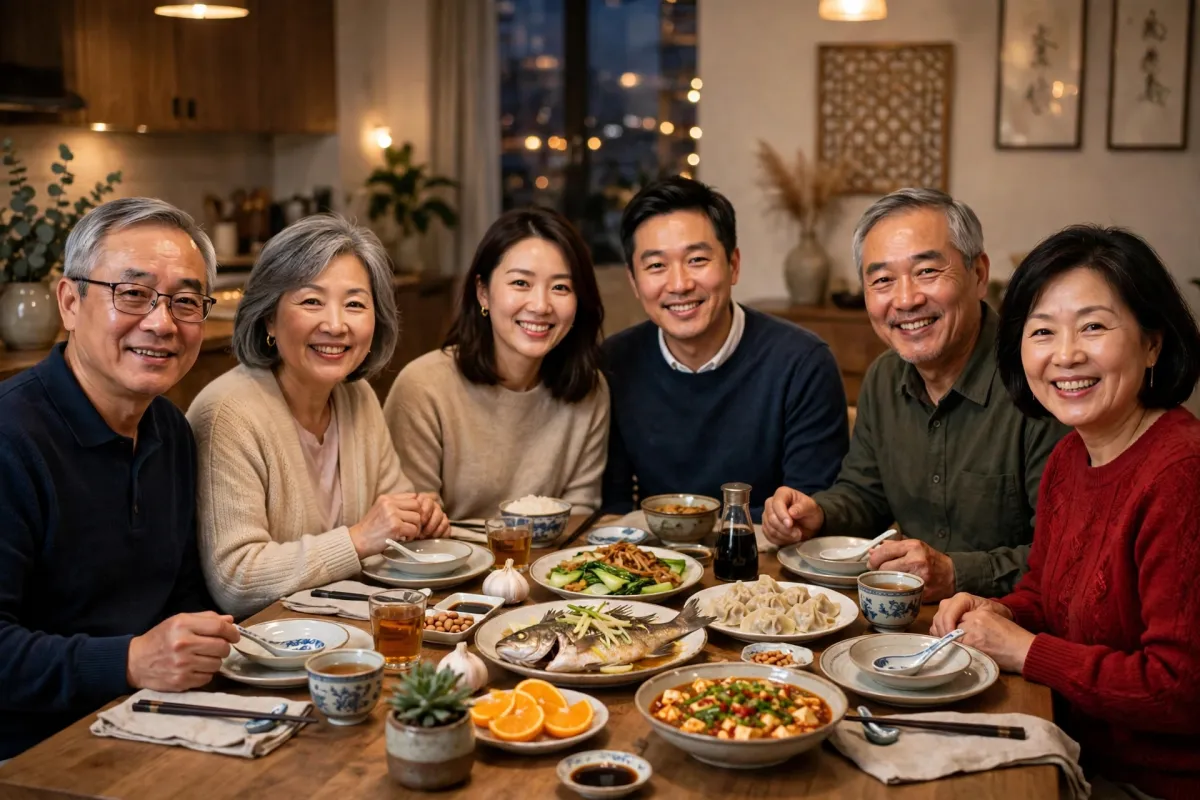
Timelines and expectations
Because marriage is the stated purpose from the first meeting, courtship runs on a shorter clock than Western dating. Meeting the family comes early, sometimes within weeks, and it counts as a milestone rather than a formality. Vague, open-ended dating is the exception, not the norm.
There is real social pressure around age, sharper for women in their late twenties and for men expected to arrive with housing and a career already in place. Families feel that pressure as concern. Their children often feel it as a deadline.
The upside of the clock is clarity: nobody spends two years unsure what the other person wants. The cost is that a slow-building connection can be cut off before it has had a fair chance.
Where the tradition strains abroad
- The introducer network is thinner. In China, aunts, coworkers and old classmates constantly play hongniang. In Toronto or Los Angeles, a smaller community produces fewer introductions, and they dry up as friends marry.
- The old scorecard says less. Hukou means nothing in Canada, and family background is nearly impossible to check across an ocean.
- Parents are often far away, in China or another city, so hands-on help like the park markets is impossible. Their involvement shifts to video calls and strong opinions after the fact.
- Second generation Chinese want both things at once: a partner their family respects, chosen by themselves. The tradition reliably delivered the first and not always the second.
- Dating apps filled the gap and dropped everything the tradition provided: no screening, no stated intent, and no one accountable for who shows up.
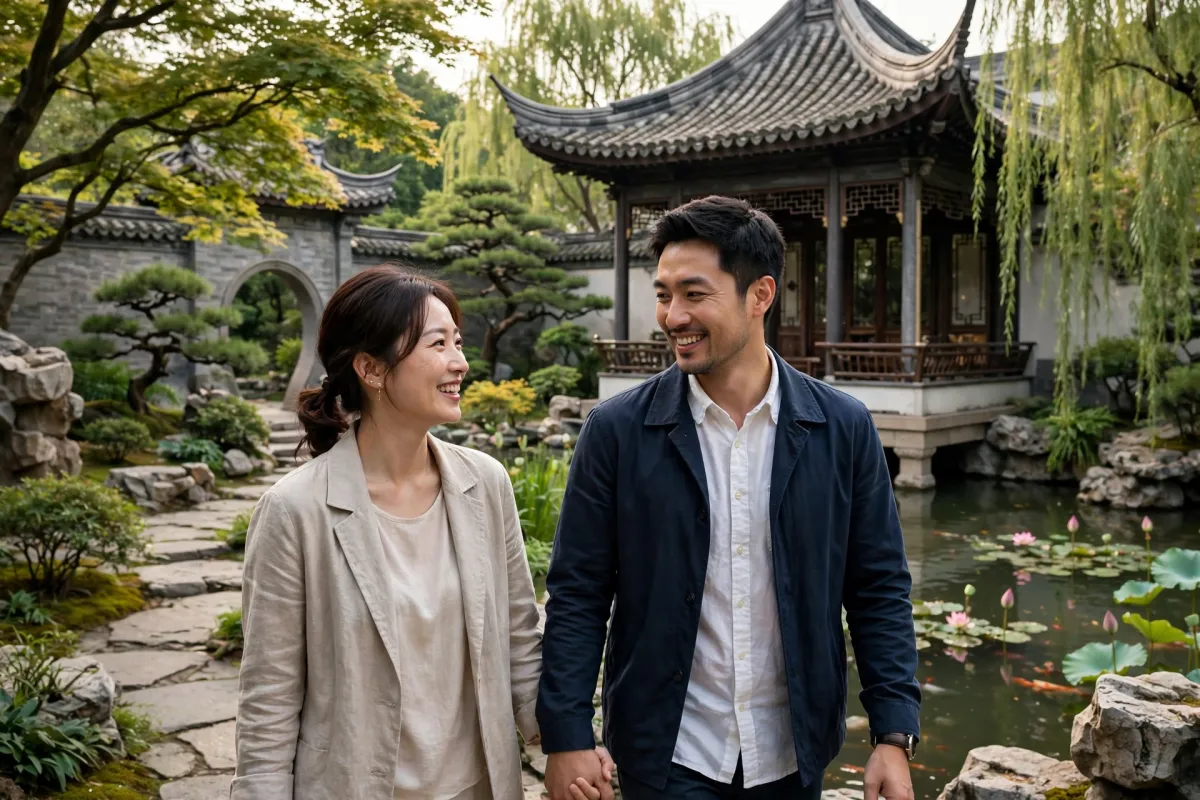
What a modern matchmaker keeps, and what it drops
Kept: a person makes the introduction. A matchmaker who has read both profiles proposes the match, as a hongniang always did. Nobody meets by algorithm alone, and nobody browses a catalogue.
Kept: marriage intent, stated up front. Like xiangqin, a Maichra introduction carries no ambiguity about why both people are there. Every member joined for a serious relationship.
Kept: checking before anyone meets. Identity is verified by a person, and matches are scored across eleven dimensions, including faith, children, language and lifestyle, before a person reviews the pairing.
Dropped: mendang hudui as a gate. Your family’s standing is not scored, asked about, or shared. What is scored is you: your answers, your values, what you are looking for.
Dropped: the housing and hukou checklist. Work and housing appear in your profile as facts of your life, not as entry requirements. Members weigh them as they see fit.
Dropped: anyone else deciding for you. Family can be involved exactly as much as you want, and no further. Your profile is private, your yes or no is private, and parents enter the story when you invite them.
How Maichra works for Chinese members
Maichra is the hongniang rebuilt for Canada and the United States. You answer 45 questions, about ten minutes, and a person reviews your application and confirms your identity with a live verification selfie checked against your profile photos. Your Match Profile and your matching are available in your own language, Chinese included. Matches are scored, reviewed by a person, and sent by email one at a time. An introduction happens only when both people say yes, and only then is anything charged. Women join free, always. Men pay $39 CAD or $29 USD per introduction, or three for $99 CAD or $72 USD. Memberships are optional: Silver $249 CAD or $179 USD a month with a minimum of 2 introductions presented a month or the month is refunded, Gold $999 or $719 with a minimum of 3, Black $2,499 or $1,799 with a minimum of 5. Maichra serves Asian singles broadly, not only Chinese members, and introductions open in each city as its member pool fills.
Frequently asked questions
What is xiangqin?
Xiangqin (相亲) is a blind date arranged by family, friends or a matchmaker where marriage is the stated purpose from the start. The basics, age, education, work and family circumstances, are exchanged before the meeting, so the first meeting itself is about whether the two people actually get along.
What does a hongniang do?
A hongniang (红娘) is a matchmaker: she learns what each side is looking for, checks the basics on both sides, proposes pairings that look sound, and arranges the meeting. A modern service does the same work with written profiles, identity verification and scoring, and covers far more people than one person’s memory could.
What are the marriage markets in Chinese parks?
They are gatherings, the most famous in Shanghai’s People’s Park, where parents post their adult children’s profiles, covering age, height, education, job, income and housing, and interview each other for possible matches. It is xiangqin with the families doing the first round themselves.
Do Chinese parents choose who their children marry?
They propose far more than they choose. Parents research, introduce and advise, and their approval matters, but in modern families the couple decides. In Canada and the US, second generation members usually run their own search and bring family in once someone matters, which is exactly how Maichra is set up: your choices stay yours, and family involvement is your call.
How much does Maichra cost?
Women pay nothing, ever. Men pay $39 CAD or $29 USD per introduction, charged only after both people say yes, or three introductions for $99 CAD or $72 USD. Memberships are optional: Silver $249 CAD or $179 USD a month, Gold $999 or $719, Black $2,499 or $1,799, each guaranteeing a minimum number of introductions presented per month, refunded in full if we present fewer.
Ready to meet someone properly?
Apply once, answer 45 questions in about ten minutes, and get matched by a person. Women join free, always.
Apply for membership