Guide
How Vietnamese matchmaking works
The short answer: in Vietnam, meeting a spouse has traditionally been work shared by the family. A mai moi, a go-between who knows both sides, proposes the match and carries the first introductions. Families meet, tea is poured, and the couple decides with the family’s blessing rather than behind its back. This guide explains how mai moi works, what families weigh, and where the tradition strains for Vietnamese singles raised in Canada and the United States.
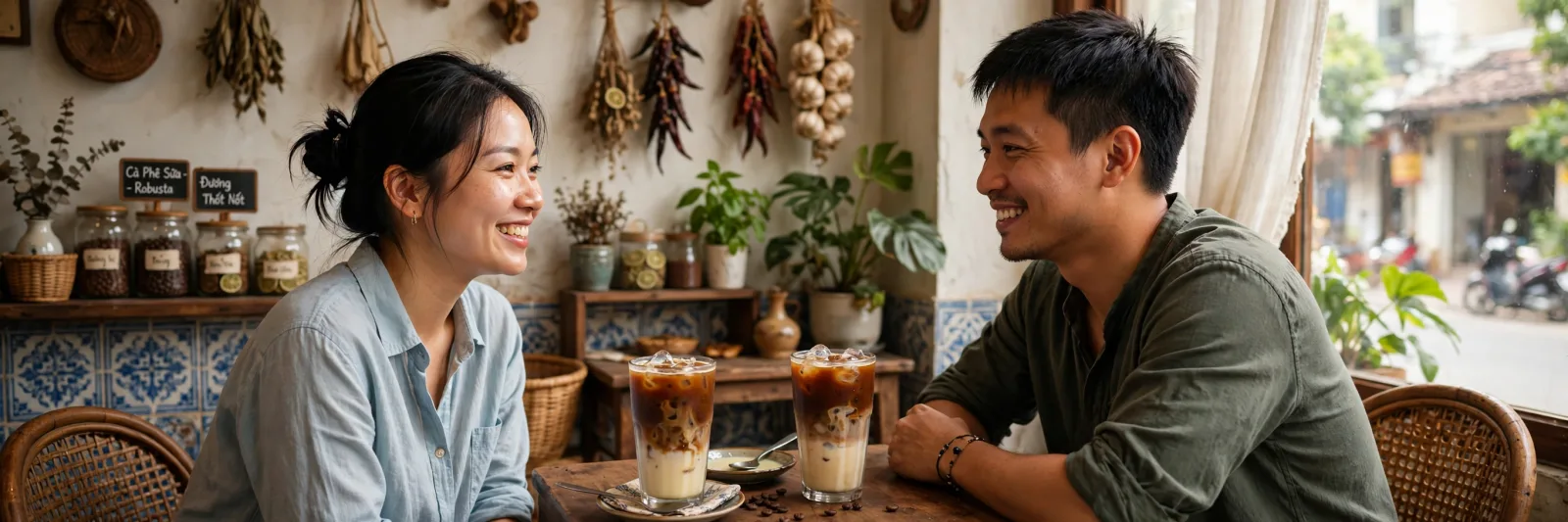
Mai moi: the go-between
Mai moi (mai mối). Matchmaking itself, and the person who does it: a relative, a family friend, or a trusted elder who knows both families and thinks two people might suit. The mai moi checks the basics on both sides, age, work, family circumstances and intentions, proposes the pairing, and arranges the first meeting only if the match looks sound.
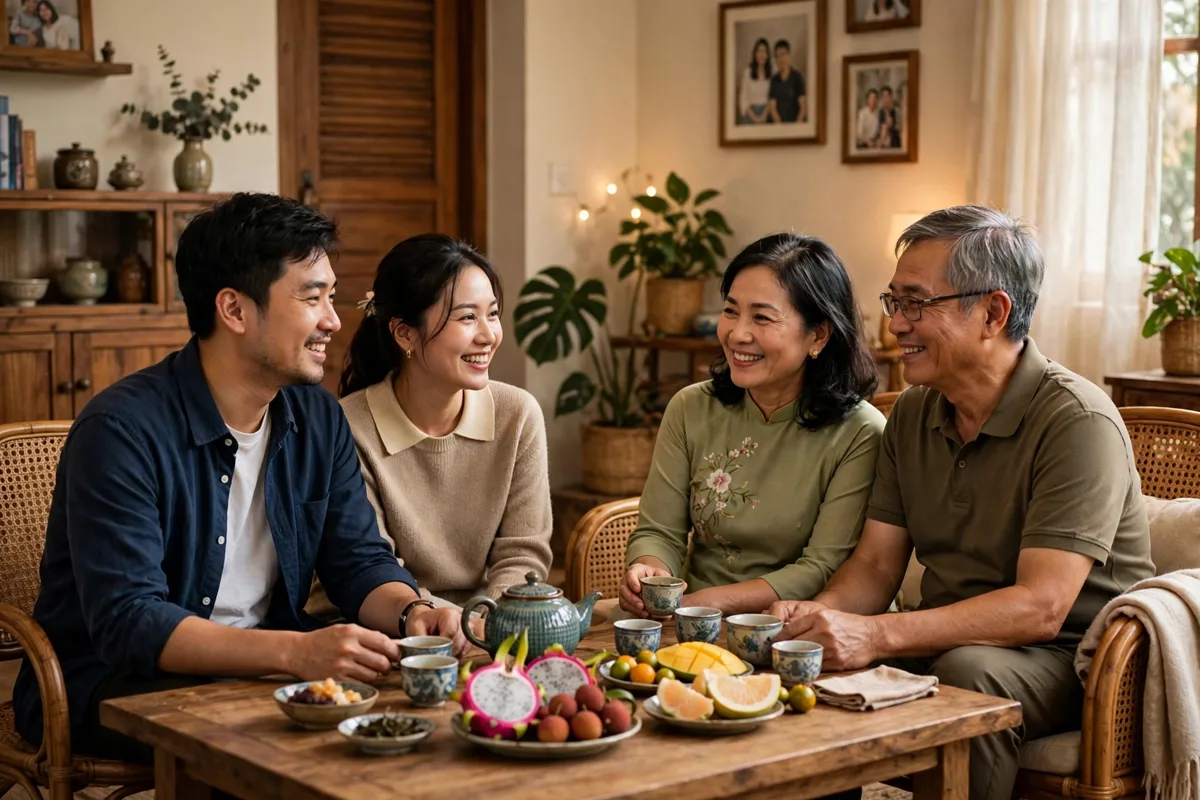
The family introduction. Early meetings in Vietnamese tradition are rarely just two people. A first meeting may happen at a family home, with parents or an aunt present, over tea and fruit. It is not an interrogation. It is two households taking the measure of each other while the couple takes the measure of each other.
The introducer today. In modern life the role often falls to an aunt, a coworker or a family friend who makes the introduction and lends it their credibility. Commercial services now do the same work at scale, with written profiles in place of memory.
The role of the family
Vietnamese families are closely involved in a marriage, because a marriage joins two families, not only two people. Parents’ blessing is sought early and genuinely: couples want it, and a match the family opposes starts with a real handicap.
Involvement is not the same as control. In most modern families, parents research, introduce and advise, and the couple decides. The tea visit, where a partner is brought home to sit with the family, is a milestone: it says this person is serious enough to be seen by the people who matter most.
Respect runs in both directions. Adult children weigh their parents’ judgment because their parents will be part of the marriage that follows: at Tet gatherings, at family altars, at every table that matters.
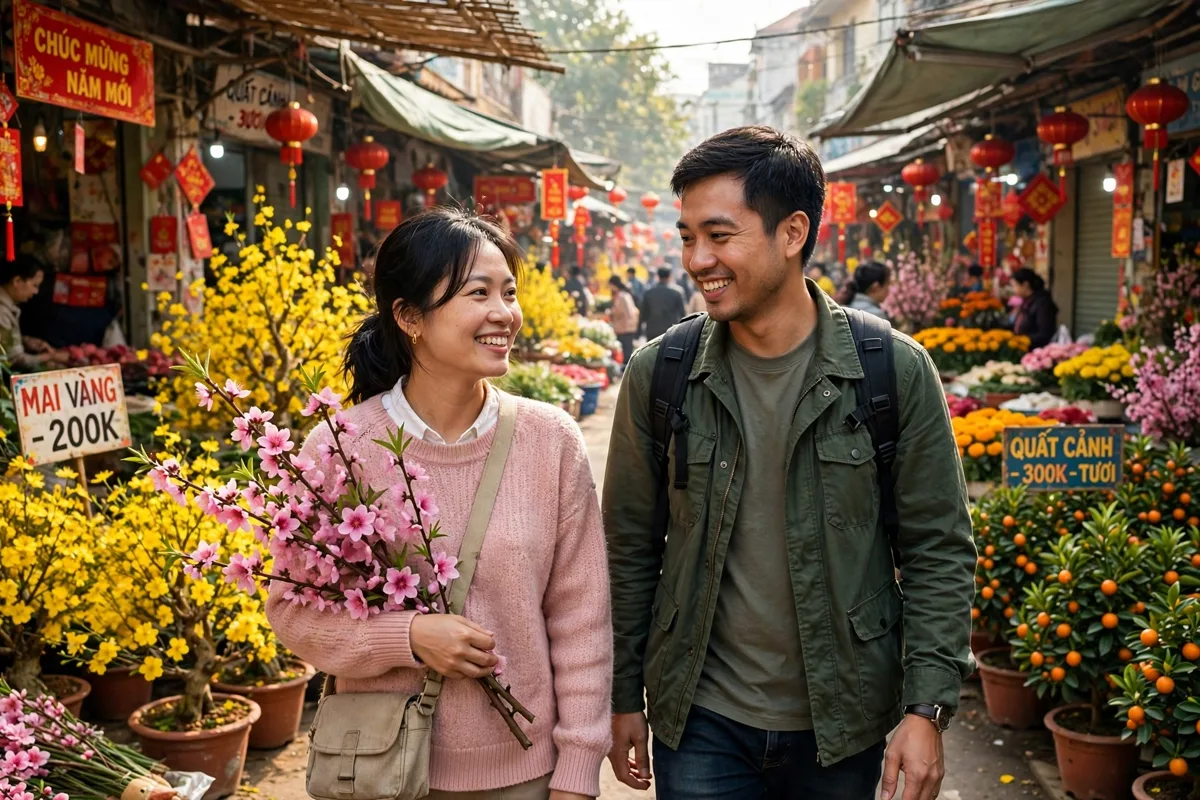
What families traditionally weigh
Character and conduct. Temperament, honesty, and how someone treats their own parents. Families watch how a person behaves at the table, because that is the person their child will live with.
Work and stability. A steady job, a trade, or a business of one’s own. The question being asked is whether this person can build and support a household over decades.
Education. Study is deeply respected in Vietnamese families, and education signals diligence and family investment as much as earning power.
Faith and practice. Many Vietnamese families are Buddhist, many are Catholic, and many keep ancestor altars and observances that shape the calendar of family life. What matters is whether two people’s practice fits together, and families ask about it directly.
The person. Age, health and temperament are weighed too, and a good mai moi has always known that two suitable files can still be two people with nothing to say to each other.
Where the tradition strains abroad
- The mai moi network is thinner. In Vietnam, aunts, neighbours and old classmates constantly propose matches. In Toronto or Vancouver, a smaller community produces fewer, and they dry up as friends marry.
- Parents are often far away, in Vietnam or another city, so the family introduction shifts to video calls and a blessing given after the fact.
- Generations weigh autonomy differently. Parents raised in Vietnam may expect involvement from the first meeting. Their Canadian raised children may want to choose first and introduce later. Both positions are about respect; they just locate it in different places.
- Language cuts both ways. A partner who shares Vietnamese shares the jokes, the family table and the elders. Finding that partner in a smaller diaspora pool is the hard part.
- Dating apps filled the gap and dropped everything the tradition provided: no screening, no stated intent, and no one accountable for who shows up.
What a modern matchmaker keeps, and what it drops
Kept: a person makes the introduction. A matchmaker who has read both profiles proposes the match, as a mai moi always did. Nobody meets by algorithm alone, and nobody browses a catalogue.
Kept: family values as an input. How close you are to your family, and how involved you want them to be, are part of your profile and part of what you are matched on. The tradition’s central fact, that family matters, is treated as information rather than interference.
Kept: checking before anyone meets. Identity is verified by a person, and matches are scored across eleven dimensions, including faith, children, language and lifestyle, before a person reviews the pairing.
Dropped: anyone else deciding for you. Family can be involved exactly as much as you want, and no further. Your profile is private, your yes or no is private, and your parents never see your profile. They enter the story when you invite them, at your tea visit, on your timing.
Dropped: family background as a gate. Your parents’ jobs and your family’s standing are not scored, asked about, or shared. What is scored is you: your answers, your values, what you are looking for.
How Maichra works for Vietnamese members
Maichra is mai moi rebuilt for Canada and the United States. You answer 45 questions, about ten minutes, and a person reviews your application and confirms your identity with a live verification selfie checked against your profile photos. Your Match Profile and your matching are available in your own language, Vietnamese included. Matches are scored, reviewed by a person, and sent by email one at a time. An introduction happens only when both people say yes, and only then is anything charged. Women join free, always. Men pay $39 CAD or $29 USD per introduction, or three for $99 CAD or $72 USD. Memberships are optional: Silver $249 CAD or $179 USD a month with a minimum of 2 introductions presented a month or the month is refunded, Gold $999 or $719 with a minimum of 3, Black $2,499 or $1,799 with a minimum of 5. Maichra serves Asian singles broadly, not only Vietnamese members, and introductions open in each city as its member pool fills.
Frequently asked questions
Do parents get involved in Vietnamese matchmaking?
As much as you want them to be, and no further. Traditionally, parents bless a match early and meet a partner at a family tea visit once things are serious. At Maichra your profile is private and your parents never see it. You decide when family enters the story.
Can I meet someone outside my city?
Yes, if your profile says so. Your profile records how far is too far and whether you would move for the right person, and matching follows those answers. Vietnamese communities are spread across Canada and the US, so cross city introductions are a normal part of the pool.
What if my family disagrees with a match?
That is your call to make, not the matchmaker’s. We will never pressure you either way. Many members find the disagreement softens when a partner has been properly introduced and the family can meet the person rather than the idea of them. The introduction order is yours to arrange.
Is Maichra only for Vietnamese members?
No. Maichra matches Asian singles broadly across Canada and the United States, and this guide covers the Vietnamese tradition because so many members were raised around it. Your profile records your heritage and your languages, and you can say which backgrounds you would like to meet.
How much does Maichra cost?
Women pay nothing, ever. Men pay $39 CAD or $29 USD per introduction, charged only after both people say yes, or three introductions for $99 CAD or $72 USD. Memberships are optional: Silver $249 CAD or $179 USD a month, Gold $999 or $719, Black $2,499 or $1,799, each guaranteeing a minimum number of introductions presented per month, refunded in full if we present fewer.
Ready to meet someone properly?
Apply once, answer 45 questions in about ten minutes, and get matched by a person. Women join free, always.
Apply for membership